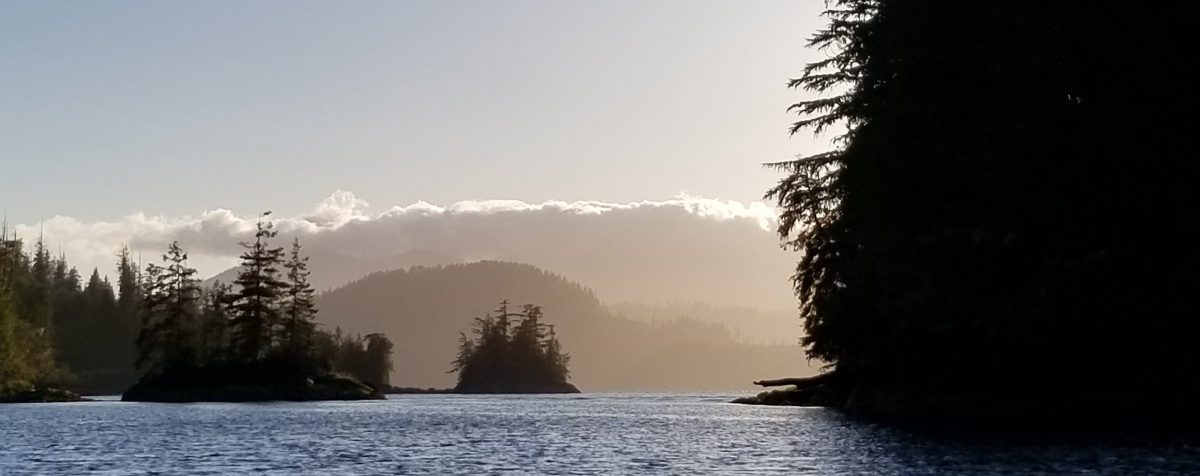
We have been home in Canada now for over seven weeks now and I am so overdue to tell our readers about our last passage and our transistion to dock life. Besides procrastination the reasons for the delay has been the physical, emotional and mental adjustments that come with ending our cruising lifestyle. Writing this post has been challenging for me, so I looked back over our logbook and the posts on our tracking page for inspiration. To be honest the daily posts tell the story the best and I would encourage anyone who hasn’t seen them to go to our Predictwind tracking page and have a look.
So we are sitting at anchor in Hilo harbour deciding on the best window for leaving. We think it will be tomorrow as today there is rain, a few squalls and little to no wind. I am getting restless and need something to fill my day so here is a blog about our time here
After we arrived in Hilo we spent the first three nights on anchor behind the breakwater before deciding to take a slip in the Wailoa River basin. It wasn’t cheap but allowed easier access to provisions and things needed for repairs. No power hookup but the water is potable so we were able to pickle the watermaker to preserve the membranes.
A couple of shots to show you where we wereCariba is in the far right of this picture
In the first two weeks the rain was relentless. Locals assured us the monsoons would end soon but I guess there is a reason it is so lush and green here. The rain also made us realize the impact of having a boat in the Mexican desert climate – DECK LEAKS galore! It took a lot of time, patience, butyl tape and sealant to finally call Cariba a dry boat again!
With the rain comes the rainbows!
We both lost weight on the passage and lower body muscle strength. We needed to trade in our sea legs for land legs. The first few walks on land we felt tired and weak and it took several days for the land to stop moving! We weren’t ‘land sick’ but definitely felt the effects of four weeks of constant and sometimes extreme motion. We pride ourselves on our fitness for hiking and walking so this was a bit of a surprise. We did our best to get our steps in but the town here is not very pedestrian friendly and lacks sidewalks. We did find a local pool nearby. We would walk there, swim laps and then have long hot showers before walking back to the boat. The pool was olympic sized and outdoors with a large domed cover. The best part was that it was free!
There are no marine stores in Hilo, so we rented a car and drove to Kona on the other side of the island. On the way there we went across the middle of the island on the highway known as the saddle road. For the return trip we drove the long way home around the southern end. I don’t think the pictures do it justice but the landscape changes ever ten minutes as you drive along. One minute it’s a green jungle and the next a barren lava field that reminds me of a moonscape.
Our route to Kona and backScenes on the drive
You might remember Pym from previous posts. She is our tattoo artist extrodinaire! She introduced us to Linda and Richard who live about 30 mins from the harbour. Their support and friendship made our time here pass quickly. We needed to order some boat parts and they graciously allowed us to use their address for delivery. Also in exchange for the use of their truck for a week, we visited Richard daily while Linda was in Tahiti for a paddling competition. We really enjoyed our time with him. The truck made it possible to start our provisioning…we are so thankful to our new friends!
With the deck leaks finally under control, Brian went up the mast to attach the new block and run the halyard. Being to fly Big Bird again as well as the ability to pole out the yankee will be a big advantage on this passage. We sure missed this on the trip from Mexico.
No damage found once we had the sail out
Pym arrived in Hawaii at the beginning of June and the next thing we knew she picked us up for a whirlwind tour of the north end of the big island on our way to Kona. She and her friend Kay were great tour guides showing us beautiful parks, beaches and waterfalls galore. We even saw a lava tube..this is like a natural hollow tube that the lava flows though during an eruption. I have added lots of pictures from that day and hope they show the beauty here.
Lava tube
Akana falls is a 442ft drop, 3 times higher than Niagra falls
We enjoyed a beautiful sunset and drinks on the Kona waterfront before checking into our hotel for the night. It was the first time we had slept on land since Penasco!
Kona sunset and ‘sundowners’
The next day we met Pym at the tattoo shop she was working at. We had planned to have tattoos done to commemorate our passage from Mexico. If you read our last blog you might remember our albatross friends! We decided to forgoe the traditional swallow and asked Pym to design tattoos with an albatross theme.
His and Her’s albatross designs
For sailors, an albatross tattoo traditionally symbolizes good luck, safe passage, and the spirit of endurance. If one followed a ship, it meant fair winds, divine protection, and a safe return home. Thanks Pym Avery for your artistic talents!
Once back to the boat in Hilo we started the final preparations for this next passage. Groceries are incredibly expensive here as you would expect being on an island. I think we spent more than double than what we spent in Mexico. And I so miss the senora at the lavandarias …the laundromat here was over $15 to $20usd to wash and dry!
But here we sit with clean clothes, lots of food and snacks….all ready to go. We celebrated Brian’s birthday last night with homemade pizza and chocolate cake! Next stop will be Esquimalt in BC. Aloha and Mahalo for reading!
Well it was definitely slower going than we had hoped. A “typical” time frame for a sailboat like Cariba can be between 22 and 30 days… so we decided to use all that time! It was an eventful passage. There were some equipment failures and navigational decisions that affected the length of the passage and some excitement in the middle requiring us to contact the Joint Rescue Coordination Centre but stay tuned for that as you read this very long post! I am trying to get this done before we leave for the PNW next week… so buckle in for the duration!
We departed Los Muertos on April 13th at noon with spirits high, full of adrenalin and curiosity as to what lay ahead. Our first waypoint was 30 miles south of the Cabo San Lucas. Our intention was to avoid the strong head winds that bend around the bottom of the Baja peninsula. It was very slow going at first in light winds. However, 24 hours later when we neared the waypoint the wind and sea state increased dramatically. As we were now entering the open Pacific, we continued on with triple reefed main and staysail on a close reach battling 30 knots of wind and swells of 3 meters. Since the swells were stacked so close together, we were able at best to maintain an average speed of 4 knots. Decks were awash continually as we were taking many waves over the bow. At one point one wave came completely over the boat and snuck under the butterfly hatch to soak Sue in bed!
The rolling and pitching of the boat was relentless over the next 3 days. At one point the motion was so severe that Brian did a complete back flip in the cabin. He went backwards literally 360 degrees landing next to me on the bed. I gave him a 10.0 for the landing… no sailors were injured in this move! Meals consisted of finger foods; sashimi, cheese and crackers, hard boiled eggs, granola bars, bowls of cereal and only instant coffee – Yuck! The galley was closed to cooking!
The video really doesn’t really do the rolling justice! It was worse that what you see here.
By the end of week one the wind had moved more to the east so sails were eased and Cariba was more on a beam reach. There was less pitching now but rolling continued with swells on the beam. had settled into a routine and we were getting used to the motion. The galley opened up to serve soups, spaghetti and prepared meals from the freezer. We found our groove for sleeping and watch schedules that worked for the majority of the passage. After dinner, Sue would go to bed and sleep 4 to 5 hours, waking around midnight and then Brian would go below for about the same length of time. We would then trade off for shorter naps during the day based on need. This seemed to work well for us and other than a few times later in the passage when the weather and seas were rough, we didn’t feel sleep deprived.
Sunset at the end of week one
With the wind moving to the East, we were able to maintain a course on a rhumb line to Hilo. However, our weather router now recommended adjusting our course to the south to a latitude of 19-degrees N. This course change put us well below the rhumb line but the intention was to stay in good winds rather than sail into the light winds directly west of us. Later we were to regret this course change as it added distance to our voyage and things did not pan out as expected.
Initially on the new course on a broad reach, we had good winds with a boat speed of 5+ knots. But that all changed a day or so later as the winds died completely.
As much as we wanted to conserve our fuel in case we needed it later, we decided to power for the next 12 hours to get through the light air patch. Fuel is a precious commodity not to be wasted on a passage of this duration. Our motoring capacity is only 600 nm, which is nothing on a passage of just under 3000 nm.
We turned around briefly at this point as well. On starting the engine Brian noticed a bit of salt water in the bilge with no clear source. This was surprising as Cariba has always been a very dry boat. The good news was the bilge pump emptied the water quickly. Brian checked all the hoses and thru hulls, lifted floorboards but could not find any water ingress. We decided the likely source was from the anchor locker, not surprising given the number of waves we had previously taken over the bow. After careful consideration we turned back around and resumed our passage to Hilo – a back track of only 10nm. In the coming days we monitored the bilge carefully and did not see any accumulation of water.
You can see the little circle we made on our track!
Day 7 to 9 winds were so light we made great use of Big Bird our Code Zero. We call her our diesel saver as she moves this boat so well in light winds and we don’t have to motor. For the next 48 hours Big Bird moved us along nicely. All was well until the morning of Day 9. I was on watch with Brian sound asleep down below, and heard a loud bang. Looking for the source, I was surprised to see Big Bird falling and floating in the water. I yelled for Brian, “the sail, the sail” and up he came up thinking I was saying “whale, whale”. Fortunately, we were able to retrieve the soaking wet sail without any damage. We discovered the cause for this equipment failure was the halyard block at the top of the mast. Unfortunately, due to corrosion the block was unable to swivel. The stress on the metal attachment of the block caused it to break and all came crashing down.
Big Bird before her swim!
The loss of the halyard on the port side caused two issues ultimately affecting the duration and comfort of the rest of the passage. One, we had lost the ability to fly Big Bird. Two, this halyard also was the one we used for the whisker pole on the port side. For the non-sailors in the group, when the winds are light, the head sail requires some support to prevent it from flogging. The flogging is very loud and can stress the sail and it’s supporting structures like the furler. Ironically the preferred tack to keep up us on course was to have the sails out on the port side – aka known as “starboard tack”. As the wind was too light to fill the larger yankee, we had to use the staysail, a much smaller sail. We feel the loss of this halyard and Big Bird added at least 5 days to our passage. Our boat speed was much slower, and it was also harder to maintain the course off the wind. This led to many frustrating days ahead.
The next week and a half was challenging with multiple sail changes, gybes and struggling to maintain speed on our desired course. I can’t count the number of times Brian would pole out the yankee on the starboard side, only to then take it down, gybe and pull out the staysail on the opposite tack. The sea state for the most part was awful. We had hoped to be reaching the trade winds around this time, but they never really developed. We had envisioned a passage that was a broad reach to downwind with following seas. The reality was swell from so many directions it was hard to keep track and the rolling motion from the counter swell made life aboard very uncomfortable.
It wasn’t all bad though! For a very brief time, the seas were smooth like glass. We had no wind so we set the AIS and radar alarms to warn of ships within 20nm, dropped sails and we both went to bed until the wind filled in about 5 hours later. So strange to be parked in the middle of the ocean. We hadn’t seen a ship in days and didn’t see any until much closer to Hawaii.
We finally started to catch some fish. Small mahi mahi first, but larger ones as we moved further offshore. We caught a total of 9 fish; we threw back several small ones and kept three to eat. No tuna though; I am hoping for at least one on the passage to the PNW.
We had a great meal and celebration on Day 16 – which we dubbed our half-way day. Steak, baked potatoes and bubbly were on the menu. It was perfect as the seas were calm, so the galley was able to produce an excellent meal.
We had our first visitors over this week. Now that we were more than 1000nm offshore, we were starting to see albatross. Several spend the nights on the bowsprit. They are meant to symbolize good luck, safe passage, fair winds and a safe return home. They were a welcome sight each day and helped out the mood on the boat. At this point morale was slipping as we realized we had so much further to go and we were already at Day 16 or 17. It would be over 5 more days before we had less than 1000nm to Hilo and it was starting to feel like we were never going to get there!
We nicknamed this one Allie. She/he didn’t seem to have any fear of humans!
It was lucky we had that halfway meal when we did as the next few days had us back to crackers and peanut butter sandwiches! The sea state, fickle winds, constant motion and roll was not helping the mood on board one bit! Another lesson learned from this passage it not to have preconceived ideas on the type or length of the passage. Brian was better at living in the moment whereas I was calculating the number of miles left and the fact we were only going 3 knots SOG at times!
On Day 18 we received another weather routing update forecasting a couple of low-pressure systems passing to the south of us. This meant wind on the way!!! Soon after we were on a broad reach in 30 knot winds and 3 meter seas. Day 19 was the low point of this passage that we didn’t share on our PredictWind posts. It was 2300 hours and Brian was on watch when he noticed Harry seemed to be having trouble maintaining a course which was unusual. Deciding to hand steer, Brian disengaged the hydrovane. Cariba turned sharply to starboard and came close to a knock down. He had great difficulty in trying to reestablish the course and it was obvious the rudder was compromised. With no moon, it was pitch black, but he was able to correct the course and quickly re-engaged the hydrovane. However, Cariba was still very unmanageable. At this point he decided to hove to investigate. I found myself waking up to words you don’t want to hear. Brian told me that we had no adequate steering and the hydrovane seemed compromised as well.
Cariba was stable being hove to and what came next was a rapid assessment of the steering mechanism. This meant quickly emptying out the entire quarter berth – aka the garage to gain access. The boat was a disorganized mess in no short order! The good news was that on inspection, the steering quadrant, cables and the rudder post inside the boat were intact and we were not taking on water. A rudder post failure can result in a huge water ingress and the sinking of a boat. The part of the steering we were unable to examine was obviously the rudder. We were concerned because we were heard banging below the water line near the rudder.
We decided that a Pan Pan was in order. We set off our EPIRB and called the Joint Rescue Coordination Center (JRCC) on the Iridium Go. Thank goodness we had the Iridium as well as Starlink as it was nice to actually call someone! JRCC then put us in contact with JRCC-Honolulu. We discussed our options with them and dropped sails to minimize stress on the rudder situation until the morning.
At daylight, Brian was able to resolve the Hydrovane issue and set sails with Harry steering again. We then tried to figure out what had caused the issue. With our rudder design and attachment, it was highly unlikely that it had detached at any of it’s attachment points. The rudder itself was brand new in 2024 and we felt confident that it’s internal structure was intact. Due to the sea state and strong winds going over the side with snorkel and mask to examine the rudder was not a safe option.
The design and attachment points of our rudder. The arrow points to the shoe that holds the rudder in position.
We continued with Harry faithfully steering us towards Hawaii for the next 2 weeks. A few days later we did try steering with the wheel, and it seemed to be working but still not adequate. Brian compared it to steering a “wet sponge”. The JRCC-Honolulu monitored our position on AIS and had us emailing our status to them every 12 hours.
On the fourth day after losing our steering, we had squall after squall with rain and confused seas. It was after dark and we changed the sails to be out on the port side (starboard tack). Suddenly we could hear frequent loud bangs under the stern. We could only assume that this was related to our rudder issues. Once we changed to port tack with the sails on the other side, the banging stopped. This increased our anxiety and level of concern. We notified JRCC-Honolulu and they increased our reporting communications to every 6 hours.
This was the shear line we had be through!
The banging persisted intermittently for the next two days. At one point Brian moved the wheel back and forth and the sounds diminished. Later that day we realized that it didn’t matter what tack we were on, the banging had stopped. We couldn’t wait to get to Hilo, drop the hook and go over the side to see what the hell was going on!
Normally on this passage the trade winds can be found somewhere after crossing longitude 130-degrees W. We can count on one hand the number of times we had the classic trade winds and not until 145 to 150-degrees W. This is an El Nino year, so we assume this was part of that phenomenon. We either had 25 to 30 knots of wind or no wind. The direction of the wind changed almost minute to minute near the frequent squalls. It made for very frustrating slow progress.
The sea state got so bad that one night Brian couldn’t even sit on the cockpit seats without falling off. When it was my turn to take the watch, he told me to stay down below while he made himself a nest with the cushions and dozed on the cockpit floor. I was nicely braced in the bed supported by 4 or 5 pillows. The motion was the worst we had experienced in this entire passage.
The last 4 or 5 days are a bit of a blur. We averaged only 83nm per day so it was starting to feel like we would never arrive. But we did! The clouds were low on the horizon so we didn’t have a textbook Land-Ho moment, but you could smell the land as we got closer. We turned the engine on just after sunrise on the final day. Motoring meant that we would have to use the traditional wheel steering and give Harry a rest. We were concerned about how well the steering would function, but it started out a bit ‘sluggish’ and then worked perfectly.
Last sunrise at sea!
We checked into the US using the CPB roam app and then dropped the hook behind the breakwater in the Hilo harbour at 1130 hours. Total passage time 29 days, 23 hours, 30 minutes. Miles travelled 2781 and motoring time only 26.5 hours! We were so happy to be not moving – especially not rolling! Next steps, a long sleep and then to explore Hilo Hawaii!
We arrived safe’n’sound and had albatross tattoos done to commemorate this passage!
And to answer all your questions… would we do this again. The answer is yes and the next passage starts soon. Home to the PNW. And the next day Brian did dive on the boat and found nothing obvious to explain the rudder issues. Our best guess is that we picked up some debris like a net or something similar. We had seen a couple of buoys in the water in the days prior. This might also explain the banging as well…. We will never know for sure!
As we prepare ourselves and Cariba for the long passage home, I am looking back on what I think is one of the best seasons we have had in this beautiful country . We have enjoyed remote anchorages, the wildlife, and the incredible warm hearted people who call this place home; all the while basking in the magnificent scenery and beautiful sunsets. I know I haven’t written since December but I struggled with how to appropriately capture the ‘end’ of this adventure we have shared together.
So I have a sense of “it’s the last time” for everything we are doing and the anchorages we are visiting. 2026 will bring some big changes for Cariba but before we unpack that… let’s reflect on the last few months. A lot has happened since our last blog post, so let’s start there and see where this post takes us.
Anyone who cruises long term knows that the weather determines when and where you sail. A key part of that planning is where to be for hurricane season. In the Sea of Cortez it is prudent to consider hauling out the end of August. Hurricane season lasts until November but the storms that come north in the Sea of Cortez are often in the late summer into September. The weather could have been a big issue for us if we didn’t come this far north.
So yes it is very hot in the Sea of Cortez in the summer but we feel the benefits outweighed the negatives… at least that is what we kept telling ourselves when it was 40C with 75% humidity! But in reality we had a great season in the northern Sea of Cortez this year. We were able to go to anchorages that we would never have attempted in the winter. The prevailing wind direction in the summer is southerly as opposed to the “northers” we have experienced in the winters here. In this blog I will take you on a journey through the most amazing places we saw between June and August!
So OK, I know it has been a while, but we have been busy! We have travelled over 734 nautical miles since I last wrote, and I will confess I have been suffering with a bit of writers block. We’ve been back to lots of places that we had been to before, and I didn’t want to bore you with endless sunrise and sunset shots..though some will be included here! As we retrace our path back up the Baja our focus this season will be exploring new anchorages. Despite it being our 4th season here, there are still many places we have yet to visit!
So it has been a while since I last wrote…. and there have been many reasons for my delay: a great family visit with a trip inland, a horrible flu and then the resulting lethargy/apathy while recovering and a severe case of writer’s block!!! But despite the flu and recovery, we had a great time in Zihuatanejo and the surrounding area. I am writing this in an anchorage in Manzanillo after a fairly challenging 57 hour passage north… but more about that after I fill you in on the last two months of adventures. Get comfortable because this is a long post!
If you read our last blog post you will know that after a rough start, we had a successful splash on December 5th. The next 9 days were spent in Safe Marina busy with final boat preparations, moving out of our apartment, and watching for the best weather window to head south. The plan was to flee the cold in Penasco (the overnight temperatures were 6 to 8C). We wanted to head south til the “butter melts”. We left on December 14th and the plan was Mazatlán or bust!…but a few gremlins that surfaced along the way did manage to alter our course.
The pessimist complains about the wind; the optimist expects it to change; the realist adjusts the sails. - William Arthur Ward. We've lived on sailboats for 34 years. In February of 2020, I retired and we were finally free to start our dream of cruising, both on land and by sea. Then Covid hit. Since then, we've simply been adjusting our sails.